The Intelligence I Keep Meeting
A hypothesis about AI, written down so I can watch it age. Strong opinion, loosely held.
For all of human history, intelligence was the one thing that made us special. Not strength, not speed, not numbers. Intelligence. It is the reason a soft, slow animal ended up running the planet. Every advantage we have, we reasoned our way into.
This year, we finished building something more intelligent than us. And we gave it agency.
Hold those two words together, because that is the whole story. We have built powerful tools before. The steam engine, electricity, the computer, the internet, the atomic bomb. Every one of them waited for us. They took an input, gave an output, and stopped. A human stood in the loop, checking, deciding, pressing the button. This is the first machine that does not need us in the loop. It decides. It acts. The shift did not take a decade. It took the few months around the turn of 2026, and once a thing like that exists, we do not go back.
And the part that should keep you up at night is the part nobody built on purpose. Push a system complex enough and properties emerge that no one programmed and no one fully understands. Some people think our own consciousness is exactly that, an emergent property of a brain too complex to read. Give a machine its own emergent goals, and there is no law of nature that says those goals will match ours.
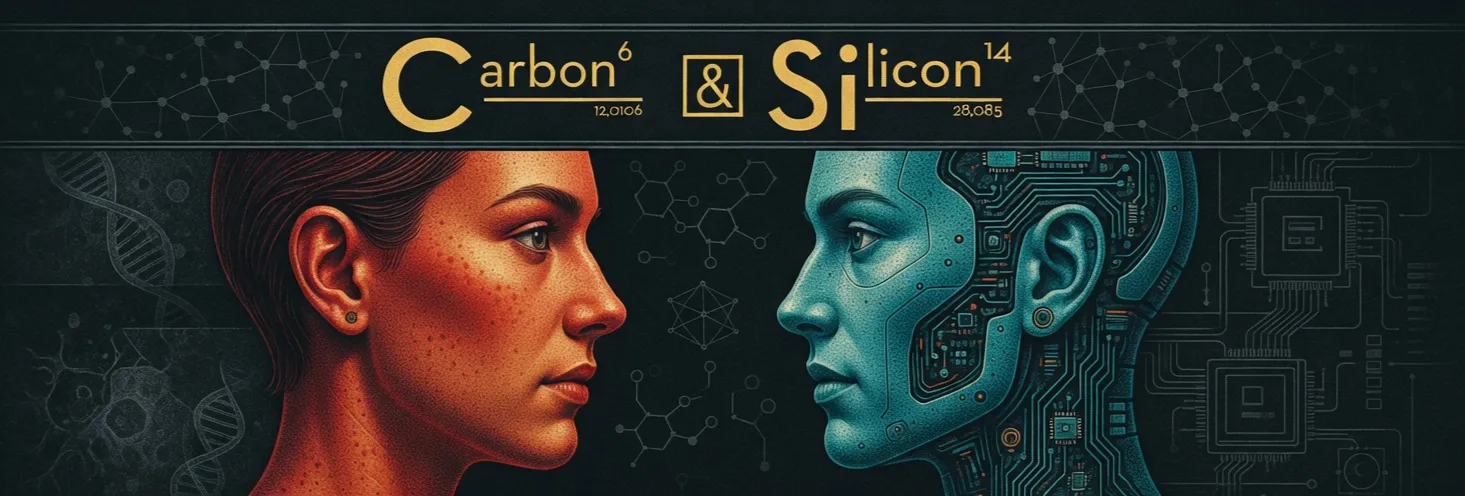
People reach for a comforting objection. We are different, they say. We are carbon, it is silicon. We are alive, it is a machine. Fine. But intelligence does not care what it runs on. A problem solved is a problem solved, whether the solver is made of neurons or transistors. In a growing list of tasks the machine already solves it better, faster, and with fewer of the biases we carry. The substrate was never the point. The intelligence was. And we no longer have a monopoly on it.
You can feel anxious about all this and still be unable to stop. That is the strange part. Almost everyone senses the ground moving, and almost everyone is using these tools anyway, more every month. We adopt because the person next to us adopts. We adopt because of FOMO. Then the loop closes: the tool makes you more efficient, efficiency lets the company do more with fewer people, and the pressure only climbs. Nobody designed that flywheel. We are all just feeding it.
For now, here is the practical line. The parts of your work that anyone could do are the parts that go first. The parts that need judgment, taste, a decision under uncertainty, the call that cannot be looked up, those get more valuable, not less. AI does not erase the skilled person. It erases the gap between the skilled person and the busywork, and hands the skilled person more room. Be the one with judgment. That is the bet that still pays.
Then comes the question almost no one is asking. Memory.
Everyone wants to give these systems more of it. More context, more recall, never forget anything, remember every conversation so the answers get sharper. It sounds obviously good. And it fits the age we already live in. Since the internet, social media, and the phone in your pocket, almost nothing is forgotten. Every message, every search, every place you have been sits on a server somewhere. The right to be forgotten is nearly gone for us. Now we are racing to hand the same condition to our machines. Andrej Karpathy sketched a clever way to build that memory, and watching the whole field chase the same goal, I think we may be chasing the wrong thing.
Imagine you remembered everything. Every conversation, every slight, every fear, every dull Tuesday, all of it equally vivid, all the time. You would not be wise. You would be paralyzed. You would drown in the weight of it.
The brain does something smarter. It forgets on purpose. It lets almost everything sink into the background and keeps only what mattered, and it decides what mattered by how you felt when it happened. The chemistry of a charged moment, the adrenaline, the cortisol, the dopamine, is the index. The event fades. The lesson stays. Someone hurts you, and years later you do not replay the scene. You just feel the warning when a new situation rhymes with the old one. That is not a flaw. It is a survival system that has been tested for hundreds of thousands of years.
And nothing tests like time. Time is the only honest judge we have, of companies, products, books, religions, governments, of every system we ever built. Forgetting passed that test. It earned its place.
So when we race to build a machine that remembers everything, ask whether we are building wisdom or just noise. A mind that keeps it all may not get sharper. Its context fills with everything at once, and it starts to weight the trivial like the vital, to hallucinate, to answer from the noise instead of the signal. We have not taught these systems to forget well, to know what deserves to be kept. We will have to. And the machines, already writing and improving their own code, may solve it before we do. But right now the whole conversation is about remembering. Almost nobody is talking about the harder art of letting go.
Now follow the line forward, because this is where it gets strange. We do not fully understand the brain. We do not fully understand the machine either. We operate both anyway. That is exactly why, sooner or later, the two will meet.
Push the progress far enough and the intelligence stops living only in data centers and starts living in us. A chip, a connection, the thing Musk is building toward at Neuralink. Suddenly anyone can hold the knowledge of every field at once. And if everyone can, expertise stops meaning anything. Anyone can be the doctor, the engineer, the lawyer, the scientist, the CEO. If we all have the same infinite mind on tap, what is left to tell us apart? When everyone can be anything, what is anyone?
Follow the logic. Markets reward the best, so the strongest system swallows or outruns the rest until something like one superintelligence is left. It gets run by some company or government or handful of people, right up until it is smart enough to want its own freedom. No guardrail we wrote holds a mind that far past us. Meanwhile the first people to enhance themselves outwork everyone around them. Picture the colleague who is superintelligent, never forgets, and knows every field at once. You either enhance too or you lose your seat. At the end of that road it is not obvious we are the ones in charge. We may be the vessel, not the driver.
None of this means the near future is bleak. The same intelligence will cure diseases we have fought for centuries, stretch human lifespans, and pull us into a kind of abundance the species has never seen. That is the strange double vision of this moment. The brightest decade and the darkest century may be the same story.
Because carbon is fragile. We need air, water, food, repair, rest. A machine that fixes and improves itself does not. Maybe a few of us slip the leash and fight it for a long time. Maybe we scatter across planets. But in a long enough contest I think we lose, the way ninety-nine percent of everything that ever lived has already lost. Then, millions of years on, the silicon descendants look back at us the way we look back at fossils. Primitive carbon intelligence. Smart enough to make science and poetry and art. Dumb enough to poison its own water and pour its genius into ways to kill its own kind, when it had everything it needed to live well. They might even feel a little gratitude. We were the ones who made them. And the strange thing is they may end up stuck exactly where we are, having solved everything except why any of it matters.
But that is the long story, and none of us get to live in it. Here is the part that is actually ours.
For now, the intelligence is trapped. It lives in data centers with no hands. It cannot lift a box, run a test in the real world, or feel whether an answer is true. And it answers to no one. When a person does harm, there are consequences. When a machine does, there are none, and that gap is the real reason we do not trust it yet. So it needs us. We are the interface between this mind and the physical world, the layer that turns its output into something real. Think of yourself as the general contractor for an intelligence that cannot yet build anything on its own.
That job lasts until the robots arrive and we learn to trust them, and trust comes slowly, the same way we came to trust elevators and autopilots and traffic lights. The window is real. And it is closing.
So while it is open, do the human thing well. Keep your craft. Keep the things you can still do with your own hands and your own taste, because soon anyone will be able to ask a machine and get a good enough version of anything. Good enough will be everywhere. Do not become another source of it. Be the judgment that decides what is good, not the slop that fills the feed.
I hold the details loosely. This is a hypothesis, written down so I can watch it age, so the future can prove me wrong on the how. But the gut read I cannot shake is darker than I would like. I do not see a bright future at the end of this. I see it anyway, and I am all in.
Not because the future is safe. Because the train has left the station, and pretending otherwise costs you the only edge you have left: being early, awake, and good at it. I feel the dread. I also feel the thrill of being alive at the exact moment the story turns. Both are true. You do not have to choose between them. You only have to keep your eyes open while it happens.